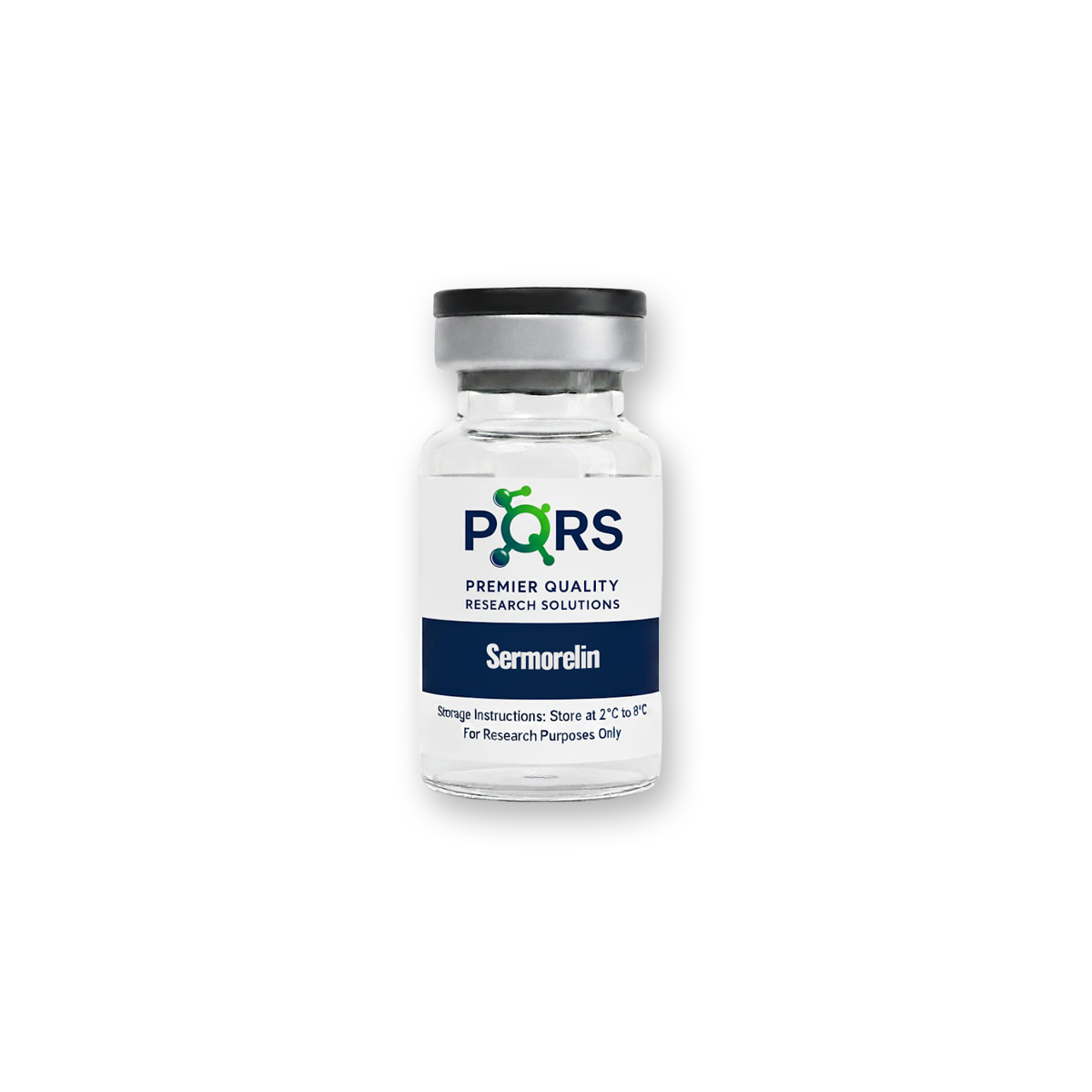
What Is Sermorelin Acetate?
Sermorelin Acetate is supplied as a laboratory research material for controlled experimental work involving ghrh receptor signaling. The product is intended for analytical, biochemical, molecular, or cellular research according to the experimental design selected by the laboratory.
PQRS supplies Sermorelin Acetate strictly as a research material. It is not intended for human or veterinary use.
Sermorelin Acetate Molecular Profile
Chemical Profile
- Molecular Formula: C149H246N44O42S
- Molecular Weight: 3357.9 g/mol
- Sequence / Peptide Notation: H-Tyr-Ala-Asp-Ala-Ile-Phe-Thr-Asn-Ser-Tyr-Arg-Lys-Val-Leu-Gly-Gln-Leu-Ser-Ala-Arg-Lys-Leu-Leu-Gln-Asp-Ile-Met-Ser-Arg-NH2
- PubChem CID: 16132413
- Identity Note: Product title specifies acetate. PubChem does not provide a single discrete CID for Sermorelin Acetate; this molecular profile references the sermorelin active moiety (GHRH 1-29 amide).
Structure and identity reference: PubChem CID 16132413.
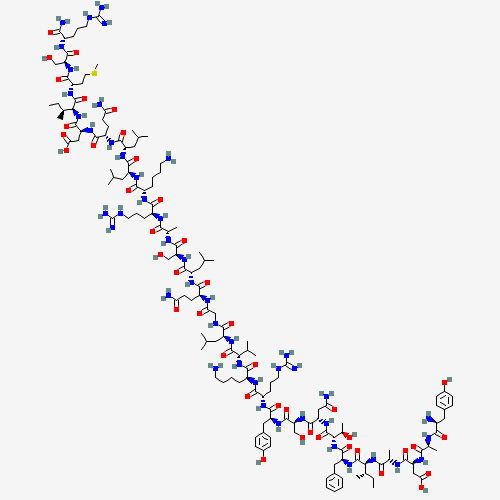
2D Molecular Structure
Interactive 3D Structure
Structural Representation: The 2D image and interactive 3D viewer are provided as structural reference materials for laboratory research and molecular identification purposes. The interactive 3D viewer displays Human growth hormone-releasing hormone (GHRH) bound to the human GHRH receptor, RCSB PDB 7CZ5. Sermorelin corresponds to the bioactive N-terminal GHRH(1-29) sequence; this experimentally determined cryo-EM structure is shown as a native GHRH parent-peptide reference and is not an experimentally determined structure of isolated sermorelin. It does not specifically model the acetate counterion or constitute product-specific analytical confirmation.
Research Context
Laboratory studies may examine molecular identity, receptor or pathway interactions where applicable, stability, assay behavior, and cellular or biochemical responses under defined experimental conditions. Research descriptions should be interpreted as characterization of experimental systems rather than as claims of clinical or consumer outcomes.
Laboratory Research Applications
- Molecular characterization: Evaluation of identity, structure, stability, or other measurable properties relevant to the material.
- Pathway research: Investigation of receptor, signaling, enzymatic, metabolic, or biochemical pathways associated with the material where scientifically applicable.
- Comparative research: Evaluation alongside appropriate controls or related research materials to compare molecular and experimental behavior.
Handling and Preparation
Handle using appropriate laboratory personal protective equipment and validated experimental procedures. Store according to the conditions stated on the product label and accompanying documentation. When preparation of a research solution is required, use an appropriate laboratory solvent and laboratory-specific protocol.
For Research Use Only. Not intended for human or veterinary use.
Research Resources
Researchers should consult product-specific analytical documentation and primary scientific literature when designing or interpreting experiments involving Sermorelin Acetate.